Dear Humira, Thank You and I Hate You
- Taylor J. Olson

- Feb 3, 2020
- 4 min read
In 2019, I got diagnosed with Crohn's Disease and paid roughly $8000 in medical bills after a 5 day hospital stay, an endoscopy, two colonoscopies, two abdominal MRIs, one CT scan, and countless visits to urgent care doctors, my general care practitioner, the most respected Gastroenterology department in the country, and more.
When refilling my prescription for Humira--you know, that drug you see 17 commercials for every time you watch television-- today, I found out that I won't have to pay a single medical bill in 2020.
This was me at my desk trying not to cry:
I need to repeat that: today I found out that I will not pay any of the hospitals or doctors I visit a single cent out of pocket. Considering thousands of of people go into thousands of dollars of medical debt every single day, this quite literally feels like a miracle. Too good to be true. My hands have not stopped shaking; I did indeed cry at my cubicle.
I have a very love-hate relationship with Humira.
Not to be dramatic, but Humira (along with Prednisone) has saved my life. Before I was medicated for Crohn's I spent hours every day biting my cheek to try to distract from the stomach pain I was experiencing. I was waking up, on average, 5 or 6 times a night to go to the bathroom. I didn't want to eat anything because everything I ate made me feel worse.
Yet despite all of those marvels of modern medicine, there are also lots of not-so-fun side effects of Humira. Some days I can barely make it up a flight of stairs because my joints hurt so badly. I have bacne for the first time in my life. And, more seriously, it leaves me immunocompromised and at a much higher risk for serious infections and the common cold alike. It also isn't exactly fun giving yourself a shot every other week, even if you get to pretend you're Meredith Grey scrubbing into surgery beforehand.
It also costs $5,858.99 for a one month supply (see also: $70k a year for as long as it continues working which is hopefully next year, and the year after that, and the year after that...). Because it is so expensive, AbbVie, the company that develops Humira, has a prescription assistance program.
I've gotten pretty good at navigating the healthcare system the last couple of years, so I was able to sign up for the Humira Savings Card. When I signed up for it last year (after I had already met my Out of Pocket Max from a hospital stay and therefore having a $0 copay on my Humira) I thought it basically worked instead of insurance.
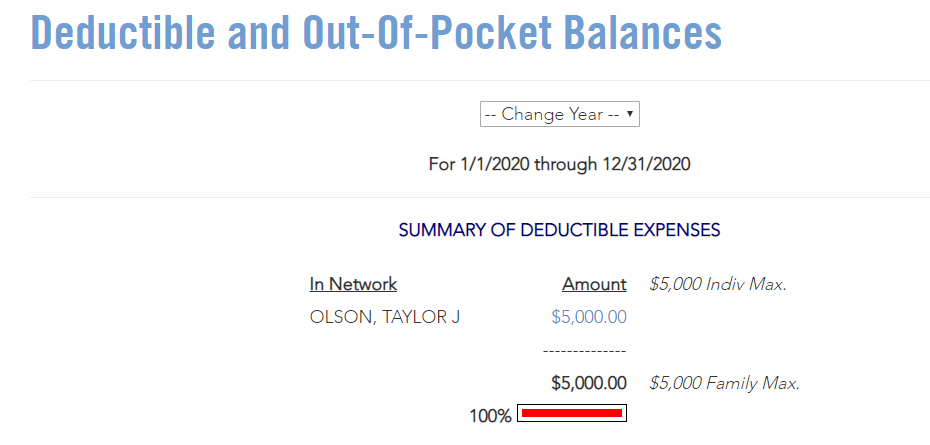
Today, after two calls to my specialty pharmacy, one call to my AbbVie nurse, and one call to Humira's insurance department, I realized that it works in conjunction with my insurance. I refilled my prescription for Humira, my pharmacy contacted my insurance, my insurance saw that the cost for one month was more than my Out of Pocket Max for the year, and told me that I owed a $4500 copay before I could get my medicine.
Then, my Humira Savings Card came into play and my pharmacy sent that $4500 copay bill to the company who developed the medicine I was trying to get. AbbVie payed my entire copay. I got my medicine delivered to my doorstep, with my deductible and OOPM met for the year without paying a single cent aside from premiums.
How nice of AbbVie, right? Not quite. The love-hate relationship continues.
You see, it's impossible to create exact generic versions of Humira, which means AbbVie has a pretty big monopoly on treating lots of autoimmune diseases. In 2018, it was the top selling drug in the United States meaning AbbVie brought it 19.9 B I L L I O N dollars in Humira sales.
They want to keep doing that, so they created the Humira Savings Card. They know their drug is wildly expensive, so they pay most/all of my copay until I hit my out of pocket max on my health insurance, and then they rake in the dollars for the rest of the year. They paid my first copay in January so that when I renew my prescription in February, my insurance company will still pay them for the drug they're sending me.
The capitalist company that developed this drug wins, the insurance company loses and uses it as a justification for the price they charge people to get the medicine they need to survive, and in the end I am left feeling both extremely grateful for the system at hand and extremely disheartened that the system exists.
Overall, I feel lucky to have found this program. I’m lucky I was able to participate in it. And I'm lucky my insurance lets copays from assistance programs count toward deductible, because many do not. Hell, I’m lucky I have insurance at all. Lots of people aren’t so lucky.
Humira,
I hate you. Also, thank you.


Comments